 English
 Français
 Italiano

Description
FINAL – D7000
Before we talk about the brand-new FINAL – D7000, let’s take a brief historical detour. At the end of 2023, Final Audio released a beautiful limited edition based on the D8000 Pro, soberly named D8000 Pro LE for Limited Edition.
This version, clad in matte black and highlighted by a gold-plated ring, equipped with paper-fiber pads and a silver cable, offered an optimized experience of the D8000 Pro.
The music was still expressed with great clarity, but the timbres gained in density. The soundstage presented the performers with a breadth and precision that set a benchmark on the market, but with the limited edition, the music stands were positioned a few rows in front of you for greater authenticity in the reproduction.
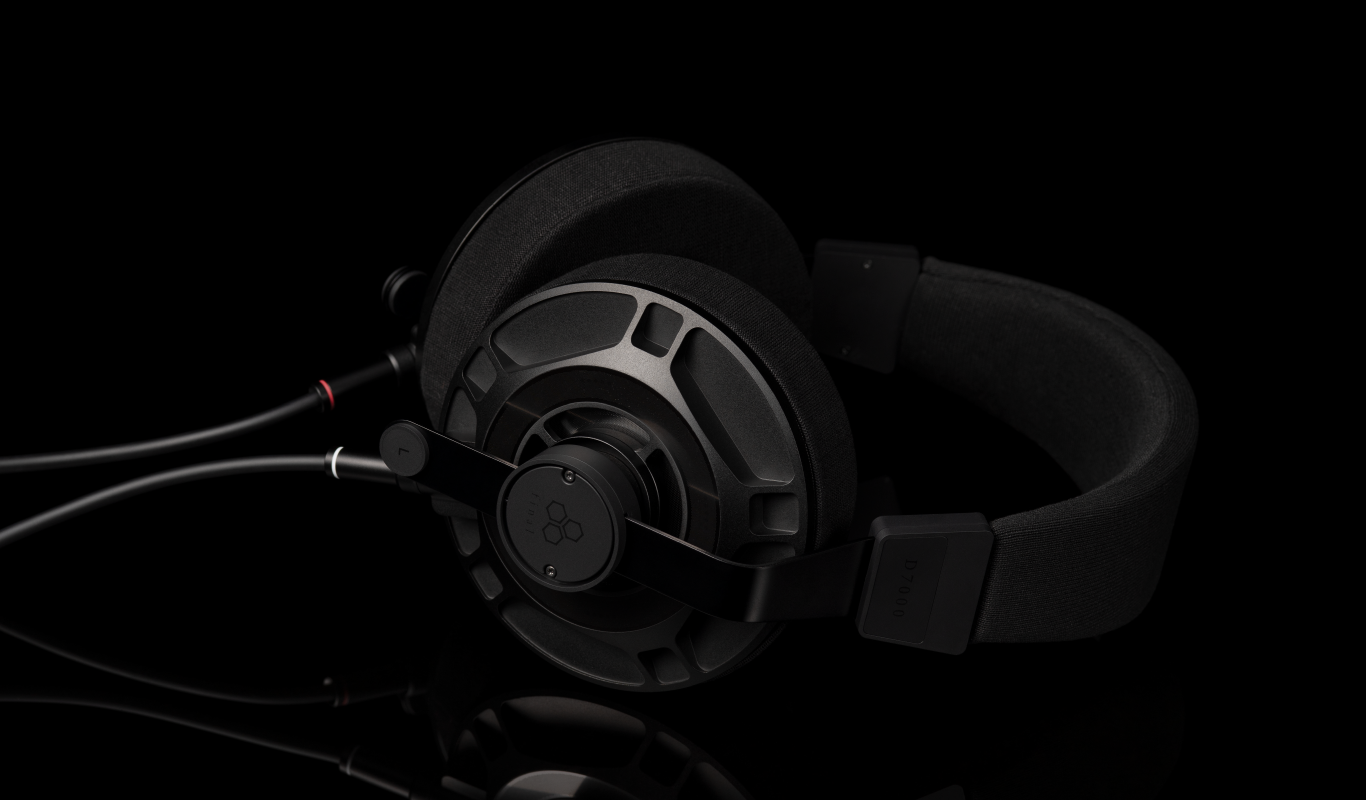
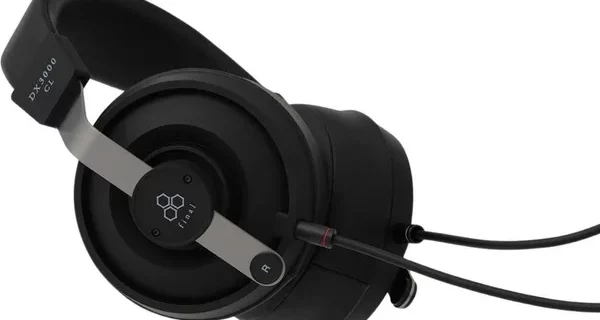
This model, available in a run of 200, was a total success! Well, you’ll find all that again with the D7000, which is, by the way, 100 grams lighter and much more affordable. How is this possible? Let’s be clear: it wasn’t Final Audio who told us that the D7000 and D8000 Pro LE are related, but if we say that they came out of Jupiter’s thigh, it’s because we know this range of headphones inside out, and we listened to Final’s latest arrival with the D8P LE’s silver cable. Compared to the D8000 Pro LE, the D7000 abandons the prestigious magnesium chassis for aluminum (we’ll get over it), its finish is entirely matte black and highlighted by glossy black lettering (the gold-plated ring has disappeared), a single pure copper cable is available rather than 2, but the FINAL – D7000 is indeed a unique opportunity to acquire one of the most distinctive headphones from the prestigious Japanese house.
With the D7000’s pure copper cable, the headset’s pedigree immediately jumped out at us. With the silver cable we’re offering at a special price (and only in this context), the pedigree is obvious. We’d like to thank Final Audio for making these elite headphones available to a larger number of enthusiasts.
D7000
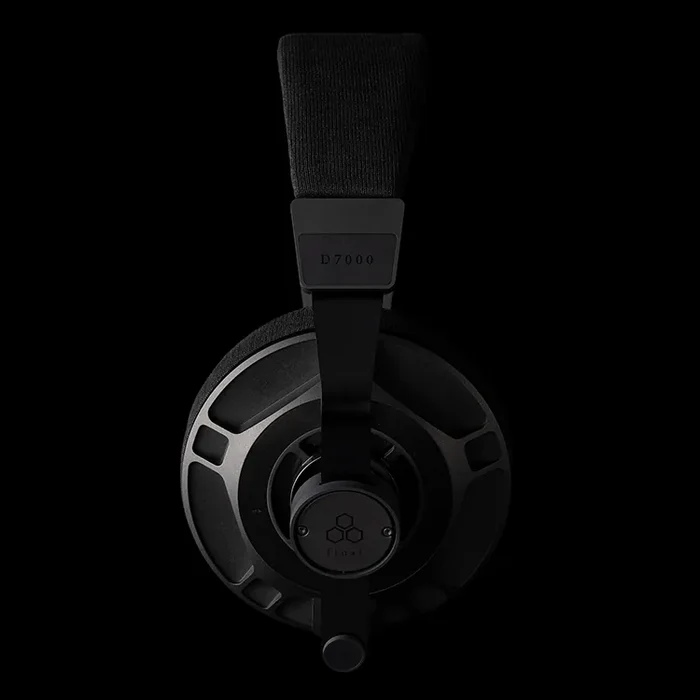
- Frame: Aluminium
- Finish: Matt black only
- Headband: Cushioned Alcantara
- Sensitivity: 89 db/mW
- Impedance: 50 Ohms
- Weight: 430 g excluding cable
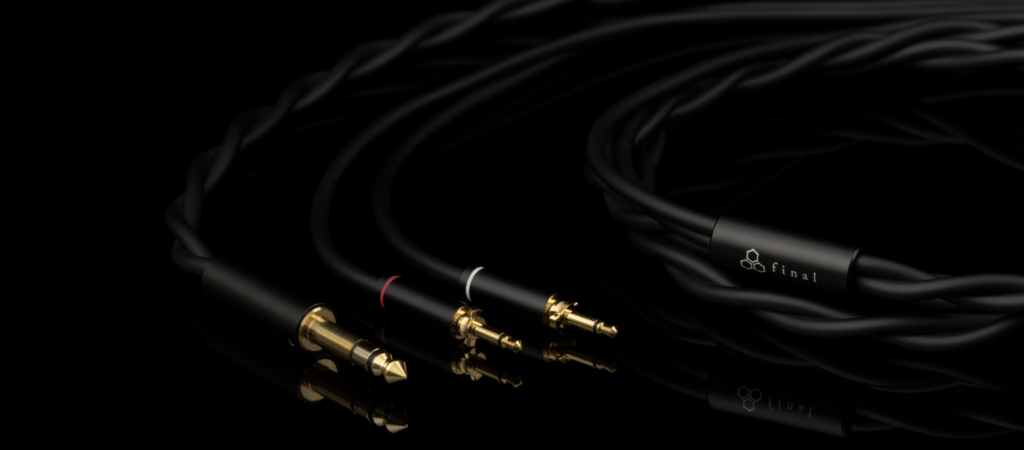
- Accessories included: Carrying case, OFC cable with 6.35mm connector
A more efficient AFDS: Air Film Damping System
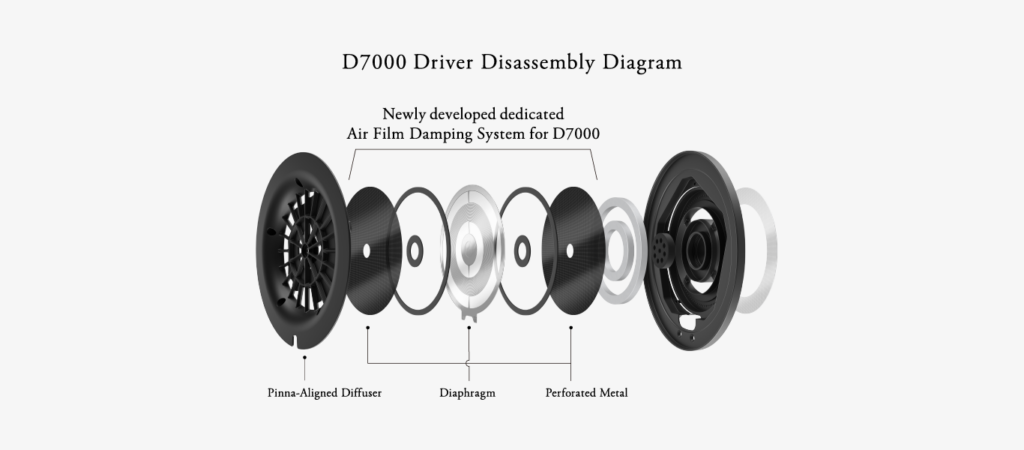
The drive unit of conventional planar magnetic headphones is normally designed to have an upper limit on the lowest bass frequency it can reproduce, to prevent the diaphragm from coming into contact with the magnet at high playback volumes. To solve this problem, we took measurements by simulating the diaphragm using the finite element method and laser Doppler devices, and developed a new diaphragm braking technology known as AFDS (Air Film Damping System).
In the D7000, the shape of the diaphragm coil and punching metal has been re-examined, enabling the diaphragm to be braked more effectively to match the physical characteristics sought in the D7000.
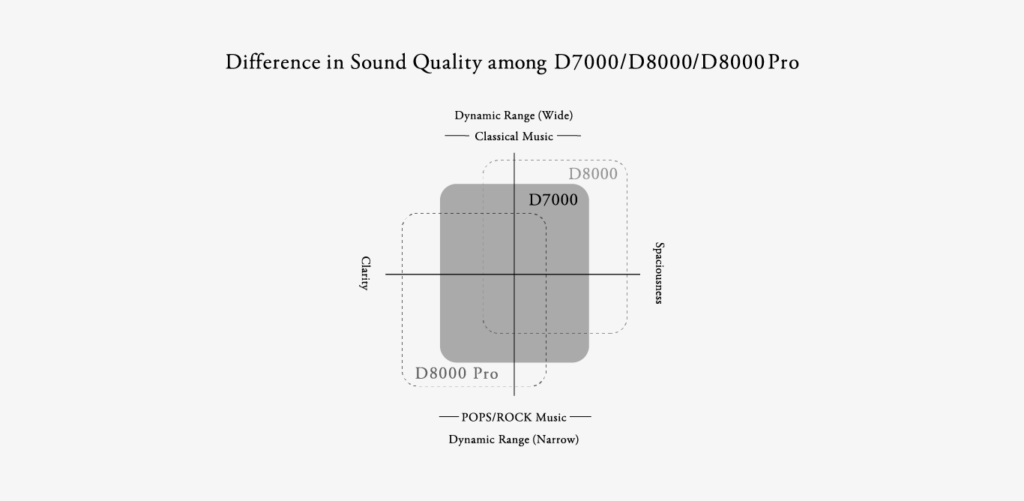
Sound quality comparison between D7000, D8000 and D8000 Pro Edition
The D7000’s redesigned drivers, including the new “Pinna-Aligned Diffuser”, produce a sound that balances the rich, open bass and delicate high frequencies characteristic of the D8000 and D8000 Pro Edition. In addition, it offers high resolution in the vocal and string ranges, with a sound that’s slightly closer to the ear and very smooth.
While the D8000 excelled at reproducing genres with a wide dynamic range, such as classical music, the D8000 Pro Edition is tuned to offer greater resolution when listening to genres with a narrower dynamic range, such as pop and rock. The D7000 falls somewhere in between, offering a balanced performance.
It classifies trends in music recordings according to two characteristics (horizontal and vertical axes) and imaginatively indicates the headphones best suited to these trends.
Accessories
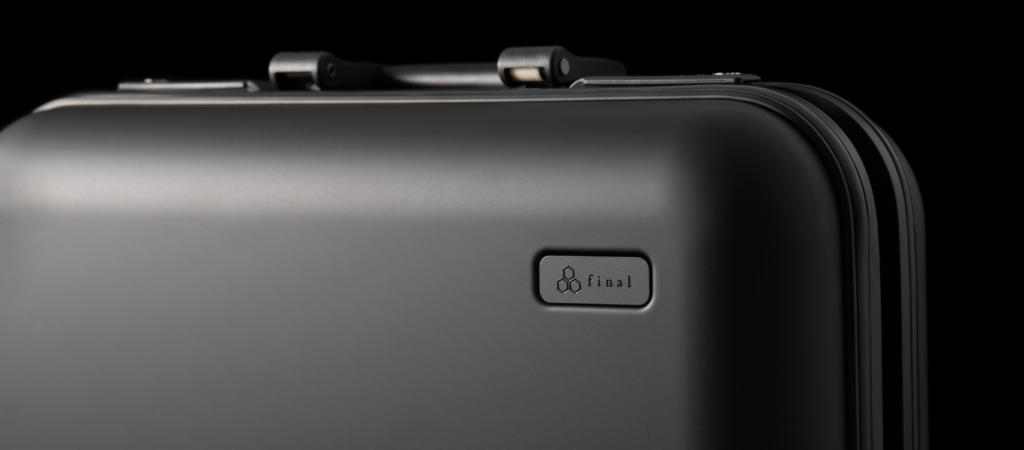
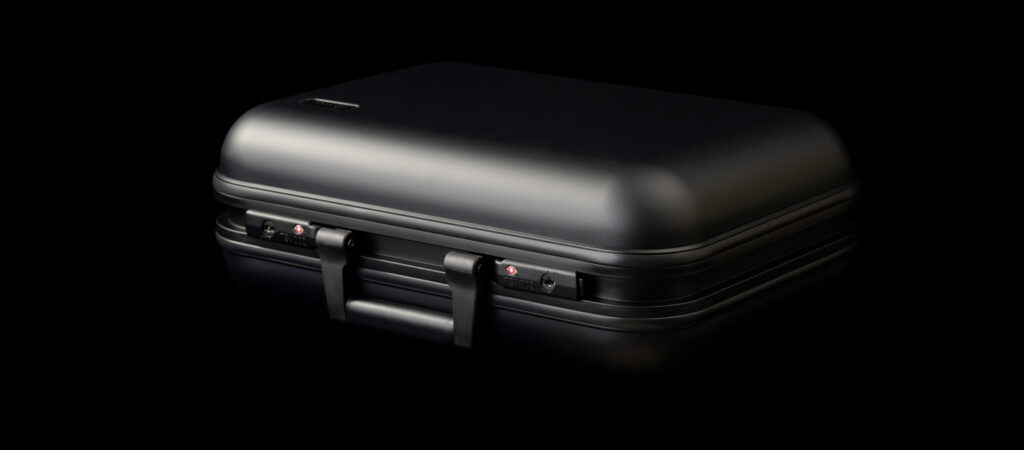
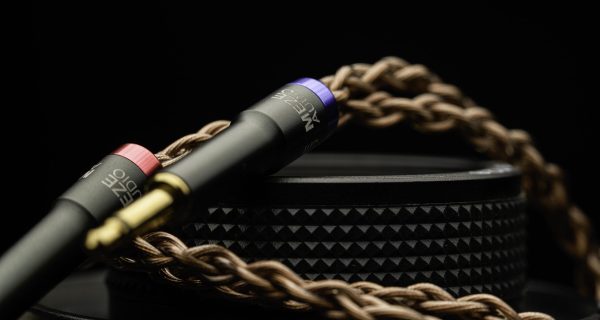
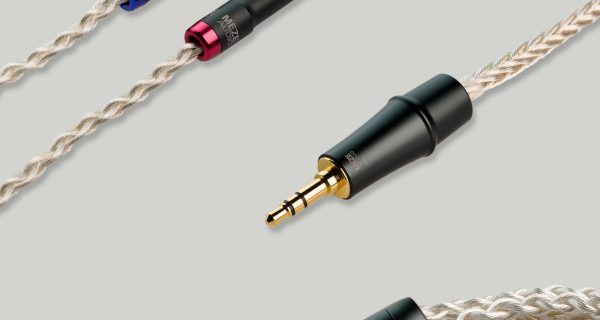
Detachable cable (OFC 6.3 mm/3 m), dedicated protective case, safety key, cable pouch
FINAL - D7000
How to put on headphones
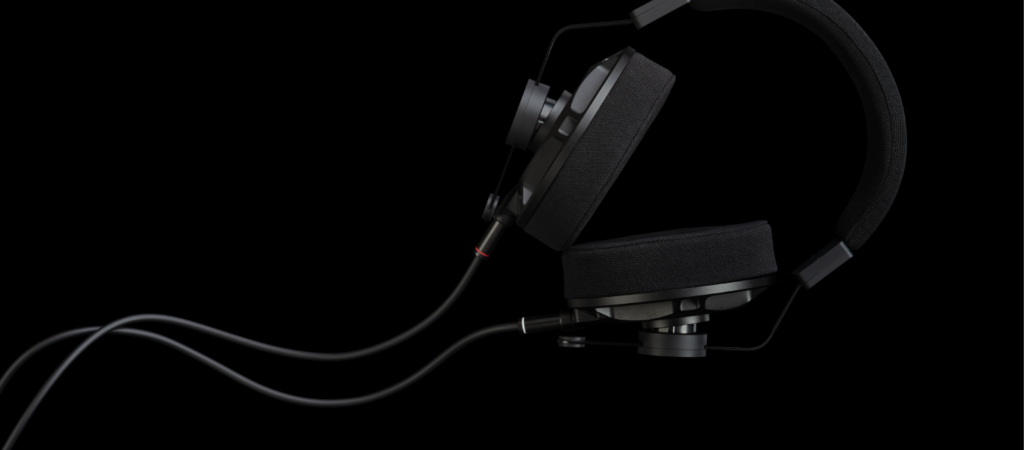
Please confirm the left and right sides by checking the L/R markings at the end of the helmet arms (L: Left, R: Right).
Also confirm the left and right sides of the cable by checking the left and right identification lines on the plug (white line: left, red line: right).
Reviews
There are no reviews yet.